
Why Did Michael Feel Terrible, A Year After "Successful" Cancer Treatment?
The biological, structural, and inner-life reasons why people stay sick—and what integrative medicine misses

Michael came to my office 8 months after surgery and his last chemotherapy treatment for colon cancer. He was cancer-free. His oncologist was pleased. He had followed every recommendation, completed physical therapy, and started working out at the gym to regain his strength. He had done what he was told, with the conscientiousness that had made him successful in every other area of his life.
He was still exhausted. His digestion was unpredictable. His pelvis, low back, and legs ached with a dull persistence that drained him. His mood was flat, and an antidepressant prescribed by his psychiatrist hadn’t moved the needle after a month and a dose adjustment. “I feel like I’m walking through fog,” he said. “And I can’t figure out why.”

What Michael was experiencing has no tidy diagnostic code. But it is only mysterious if you refuse to look at the last 20 years of integrative systems biology research. The research shows us the relationships that give rise to persistent pain, fatigue, GI distress, and other debilitating problems. It points to something that most medical care, even very good medical care, is not designed to address.
The short version: illness doesn’t live in one domain, and neither does healing. Every part of your biology is part of an information system that is networked across biochemistry, neurology, and biophysics. That system unifies what medicine tends to treat as separate departments: immune, digestive, neurological, hormonal. It’s one system. And all of that biology is fully integrated with your biography: your heart, your mind, your soul.
Your organ systems are not separate columns in a spreadsheet.
Your biology and your biography are not separate columns in a spreadsheet.
All of it is one interdependent, unfolding process.
Most medical care carves out a piece of that process and aims to fix it. It neglects the integration of your biological systems with each other. It rarely considers how diagnosis and treatment reshapes your inner life. Your emotional history, relationship with oneself, sense of meaning, etc. And it almost never asks how that inner life contributes to the disease process, or is now preventing recovery.
That, in general, is why Michael still felt like a shell of a man nearly a year after finishing his “successful” cancer treatment.
Today I want to be specific about why he was stuck.
What His Oncologist Couldn’t See
In three decades of patient care, supporting people who continue to suffer despite the best medical care, I’ve found It’s useful to think about three broad windows into a person’s biological reality. I call them the Three M’s:
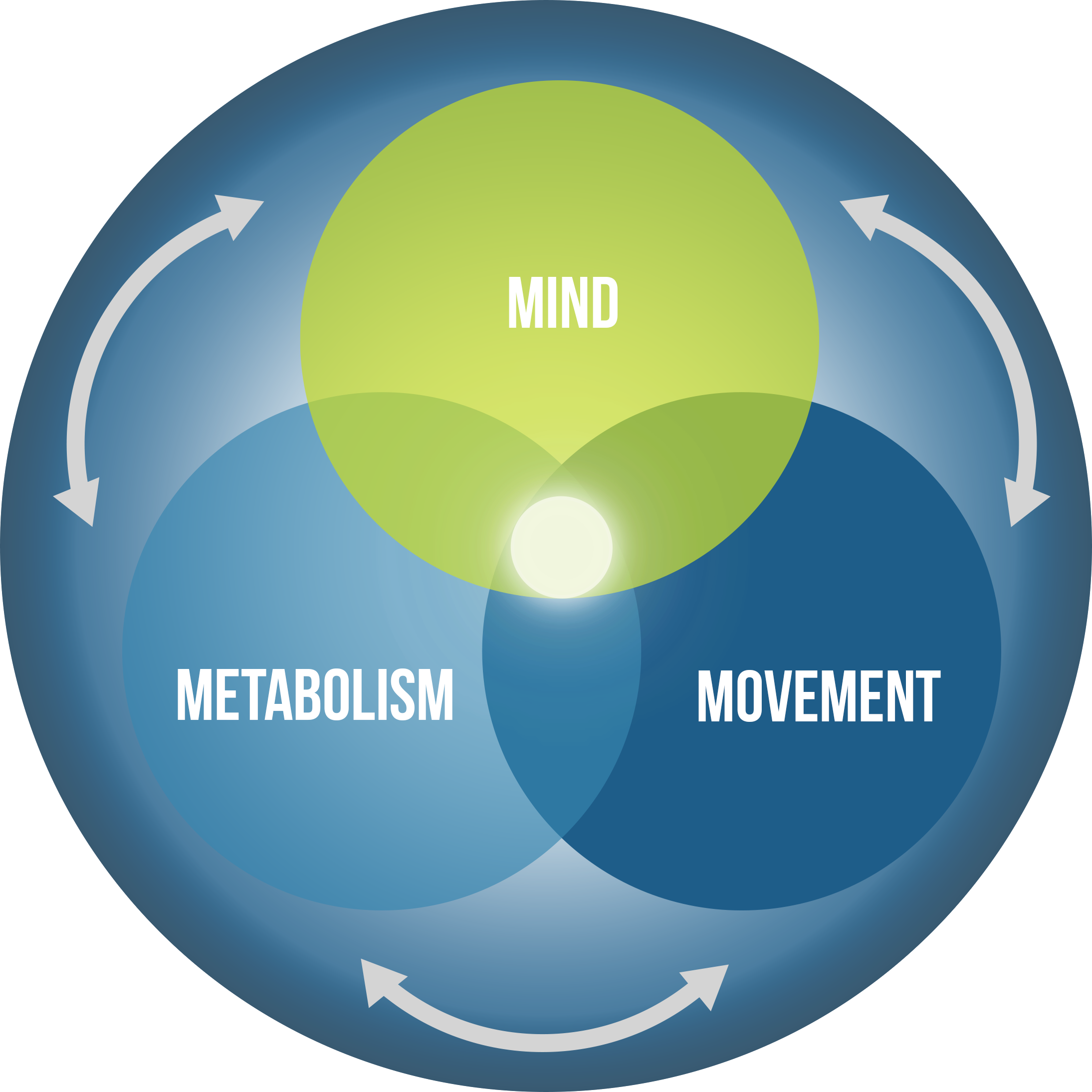
Metabolic/Biochemical, Mechanical/Structural, and Mind-Body.
Here’s how I understood Michael’s situation in that model.
1. Metabolic and Biochemical.
Surgery and chemotherapy saved Michael’s life. They also inflicted real damage.
His gut microbiome had been profoundly disrupted. “Dysbiosis,” as it’s called. That inner ecosystem of microbial species doesn’t just help you digest food; it shapes mood, inflammation, and metabolic function in ways that science is still mapping but that matter clinically, now.
His gut lining had become “leaky”. Leaky gut syndrome is a multifactorial consequence of chemotherapy, dysbiosis, insomnia, and massive emotional stress. When leaky gut persists, it sends a stream of inflammatory signals into the bloodstream and the whole body.
His mitochondria were dysfunctional. These are organs inside the cells that generate energy and sense danger and other intercellular signals. Inflammation and cellular stress cause them to work inefficiently, feeding back into more cellular stress. Cellular stress and mitochondrial dysfunction contribute to the bone-deep fatigue that had outlasted his treatment by most of a year.
He had specific nutritional deficiencies that conspired with inflammation and cellular stress to impair nerve repair, immune regulation, and cellular energy production. Vicious cycles of biological imbalance.
And his pain-processing circuitry had been sensitized. Inflammation, inadequate sleep, persistent pain, an overactive stress response, and strong negative emotional states all converge to turn up the amplifiers in the spinal cord and brain. Sensitization of pain processing is a real, molecular-level change. The pain can persist long after the tissue injury has healed.
None of this is mystical. It’s predictable, research-backed, and increasingly addressable with targeted interventions.
2. Mechanical and Structural.
Colon surgery changes the body’s architecture. The low back and pelvis are a complex web of organs, bones, muscles, and connective tissue — fascia, ligaments, nerve pathways. Surgery distorts that web. Post-surgical scarring and compensatory movement patterns distort it further. Extended deconditioning compounds everything.
The spinal segments supplying the pelvic and abdominal region had become sensitized, maintaining a low-grade state of dysfunction that kept local tissues in a chronic holding pattern. Michael had also lost significant muscle mass and the neuromuscular coordination essential not just for physical performance, but for pain regulation.
3. Mind-Body.
Cancer diagnosis and treatment is personally traumatic for most people. It is experienced as a threat to one’s integrity and trust in life itself. Even with attentive family and compassionate providers, the process can be profoundly isolating. It tends to re-awaken painful aspects of personal history and touch core existential questions.
Michael had navigated months of grueling treatment while holding his professional life and his family together. In doing so, he had stored a great deal of unprocessed experience in his nervous system. He was holding unmetabolized fear, grief, and shock that had never had a place to land.
Trauma registers in the body. Unprocessed emotional experience drives real changes in stress biology: influencing hormones, inflammatory markers, pain thresholds, and immune function. The mind-body connection isn’t a metaphor. It is physiology.
Integrative Care Works — And It Has a Ceiling
Addressing these Three M’s is the foundation of genuinely integrative medicine, and it produces real results. For many people, it creates profound improvement: more energy, less pain, more space to live. The clinical evidence continues to grow. Integrative care that attends to biochemistry, structure, and the mind-body system often helps the people for whom the best biomedical “disease treatment” has been unsuccessful.
Michael improved meaningfully when we addressed these domains. That mattered. But he wasn’t home yet. Something was still “off” for him.
After nearly three decades caring for people with chronic pain, complex illness, and recovery after major medical events, I’ve come to recognize a pattern. Even when the Three M’s are addressed well, some patients plateau. The symptoms quiet but the person is still somehow stuck. They are still living in a contracted, guarded relationship with their own life. In some cases, they can’t sustain the changes that would continue to improve their biology.
What I’ve gradually understood is that the Three M’s, including the Mind-Body relationship, all operate within the same domain. They address the embodied self. The animal soul: the neurobiological patterns, the stress responses, the emotional residue held in tissue, nerve, and neural networks.
Integrative medicine that addresses the Three M’s is real and important work. But it is still “the embodied self trying to heal the self”. The ego-level system is working to regulate the ego-level system.
And for some people, Michael among them, that is precisely the ceiling of their recovery.
The Healing That Integrative Medicine Cannot Do
There is a dimension of a person that sits upstream from the biochemistry, the structure, and even the nervous system. It isn’t the mind. It isn’t the emotional body.
It is something that most people have touched. A moment in nature, deep sense of connection to another, absorption in beautiful music, maybe meditation or a psychedelic experience. The mind stops churning and the heart opens to something bigger, more awesome, more beautiful. Most people know a moment like that, but don’t know how to find deliberately, or work with therapeutically.
What happens at that moment? It’s a meeting with what you might call it the soul, inner self, or higher consciousness. Whatever language you use, it points to the same thing: a level of being that is transcendent of the ego-self. It’s not defined by the body’s condition, or by survival-driven patterns of the nervous system. It’s not confined to the story of who we’ve been told we are or who we’ve told ourselves we are.
Most people know this dimension exists. They’ve felt it. They just don’t have a map for it. And most don’t recognize it as a resource for healing.
When someone is stuck despite good integrative care, the inner soul opens a door to deeper healing.
Michael’s situation was a clear example. He had spent his adult life building an identity organized around conscientiousness, competence, and control. Do the work. Follow the plan. Get the result. It had served him well. When he “got cancer” he applied the same approach. He followed every recommendation. He worked at treatment and recovery the way he’d worked at everything else.
But the thing he most needed couldn’t be achieved by effort. The harder he pushed, the more he reinforced the driven, contracted, vigilant neurobiological state that has previously helped him succeed. But now it was keeping his system locked in a stress response, and disconnected from his inner resources of healing. He was trying to heal from within the same level of being that had inhabited during the years when his illness developed.
It’s like an orchestra playing harder and harder when what’s missing isn’t more effort from the musicians. They need a good conductor. The conductor first hears and connects deeply to the music. And then provides a higher organizing principle that brings the parts into coherence. Something that the individual musicians can’t provide from within themselves.
That is the process that Michael and I explored together.
What that process involved, and what it opened in him, is what the next piece is about. It should be up within the week.
Read the next part about how Michael really reclaimed his life…

What Next?
This Substack is the place where I’ll be sharing more principles and practices about the healing process, the underlying science and medicine, interesting cases and live conversations, and the ancient healing wisdom of Kabbalah and Torah.
If this way of thinking about healing speaks to you, I invite you to subscribe below.
And if you feel drawn to explore this work with me personally, you’re welcome to schedule a no-charge Right Fit Call. Click the link below to begin the process. There is an online intake, and you can schedule a Zoom appointment.