
When Survival Isn't Enough
Why full recovery begins with the part of you that was never sick.


Let’s return to Michael.
He was 52 when he was diagnosed with colon cancer. He went through “successful” surgery and chemotherapy. Scans and markers were clear. By every medical measure, a success.
But a year later he was still exhausted, dragged by chronic pain, and couldn’t find his way back to his life. His story has much to teach anyone who has been through serious illness, injury, or trauma.
In Parts 1 and 2 of this series, I described the gap between excellent medical treatment and genuine healing. We explore the systems-biology model that explains why so many people continue to suffer without clear diagnosis.
Read Part 1 here:

Read Part 2 here:

Keep going with this article, because it’s the most interesting part…
We addressed those biological issues with Michael. Brought balance and health to his gut, mitochondria, fascial system, pain circuitry, and released much of the unprocessed residue in his nervous system. He improved meaningfully: more energy, less pain, better sleep.
But he wasn’t home yet.
The Ceiling of Good Integrative Care
Here is a pattern I’ve seen across nearly three decades of practice: even when the conventional and functional medicine work is done well, some patients plateau. They feel better physically, but something is still off. They can’t fully reconnect to their lives.
The reason, I’ve come to believe, is identity.
Illness and intensive treatment don’t only leave marks in the biology. They leave marks in the biography.
The diagnosis, the fear, the vulnerability become part of how a person experiences themselves. Michael still felt, at some level, like the man who had cancer. Even with clear scans, he carried a gnawing inner sense that things weren’t okay. It went beyond anxiety about recurrence. He couldn’t find a vision of his future. He felt no real reconnection with his family or his work. He was like a ship floating in the ocean without power or direction.
The ceiling of healing is an internal process. It’s not a character flaw. How do you turn off the fear, and reconnect to what matters. And how do you let life flow through you.
That was the work that transformed Michael’s situation and helped him build a life and self that was even more fulfilling than before his illness.
Who Are You, Your Sickness or Your Health?
Illness and other crises draw our attention and consciousness to “what’s wrong”. We can easily get disconnected from “what’s right”. As it says…
בְּמָקוֹם שֶׁמַּחֲשַׁבְתּוֹ שֶׁל אָדָם – שָׁם הוּא כֻּלּוֹ
Where a person’s thought is, there he is entirely.
(Rabbi Yisrael ben Eliezer, the Baal Shem Tov, 18th century)
The Kabbalistic framework offers a useful framework here.
Each of us is a fusion of two aspects of being. An animal soul and a divine soul. The animal soul is the embodied self that manages survival, navigates threat, and seeks pleasure. The divine soul the Neshama. The inner spark or essence of who you are. It secretes inspiration, purpose, and energy. It’s a transcendent dimension of self that exists above and prior to everything that has ever happened to you.
The dance of the animal soul and divine soul is a big determinant of suffering, healing, and quality of life.
These two dimensions are meant to live in partnership like a horse and rider. The animal soul is like a horse that has power and energy and instinct. And the divine soul is the rider, that guides the horse with wisdom and compassion. But when crisis strikes, the animal soul naturally takes over. It mobilizes its protective energy. The ego-self feels threatened and responds from fear. That’s it’s job. All of our attention goes to the needs of the moment.
As the Baal Shem Tov taught: “where our attention goes, there we are entirely”. When illness or a sense of danger command all of our attention, we become identified with illness. We become “a person with cancer”. Life organizes around the diagnosis or a sense of being sick. We can lose sight of our potential and our higher purpose.
There is something else worth naming. Even before the crisis, most of us have been slowly drifting away from our deeper source. The relentless press of obligation and chronic stress gradually disconnect us from what’s most important.
The health crisis doesn’t create that disconnection. It slams us up against it.
That confrontation is painful. But it is also an opening.
When illness forces us to stop and look honestly at our lives, it can reveal what we’ve been missing with surprising clarity. The relationships we’ve neglected. The higher purposes we’ve deferred. The person we intended to be, who has been neglected. The pain of that recognition is not a detour in the healing process. It is the fuel of genuine transformation.
The crisis is an opportunity for healing. Not to merely come back to a more resilient version of who we were before the crisis. The opportunity is to reconnect to source, so the illness becomes a catalyst that helps us become who we most want to be.
That happens when we flip the polarity and mobilize the principle of Where a person’s thought is, there he is entirely.
When we intentionally direct attention toward the Neshama, toward the inner spark, we begin to identify with the dimension of self that is inspired, wise, and compassionate. The part of us that was never sick, never frightened, never stamped with the story of brokenness.
Mind-body medicine offers real value. But it works within the ego-self or animal soul, and mainly focuses on turning off stress circuitry, reframing beliefs, and sometimes healing unproductive emotional patterns. That’s a genuine step. It’s not enough.
When you learn to contact the inner divine soul, you don’t just change the stress circuitry. You access an inner resource that shifts the whole system.
How To Access a Different Dimension of Being
Most people have touched neshama, even if they didn’t have a name for it.
Walking at the ocean and feeling the heart unexpectedly open. When music moves you and quiets the noise of the mind. A moment in prayer or meditation when there is a shift, release, or insight that feels connected. In those moments, the constricted, separate self recedes and you touch something bigger.
Researchers studying meditation, near-death experiences, and clinical psychedelic trials document a consistent cluster of qualities in these states: a felt unity with something larger than oneself, a softening of the usual ego-boundary, an inner knowing that arrives not as intellectual thought but as direct recognition. And these perceptual qualities are often accompanied by awe, love, and joy.
These are the qualities of divine soul.
Kabbalah has a precise map of the relationships among body, heart, mind, and spirit. It’s the operating system that explains what is underneath our successes and failures, joys and sorrows. And it offers something science is only beginning to approach: a systematic practice for navigating the operating system to support healing, success, and alignment with our highest purpose.
Your neshama exists upstream from your embodied history. It has no memory of the diagnosis, no investment in the contracted story of who you’ve been or what has been done to you. Think of your ordinary mind as a well-worn path through a garden. The path was shaped over decades by habit, fear, and necessity. The neshama is the gardener: the one who sees the whole garden, knows exactly what wants to grow there, and knows exactly how much water and fertilizer is needed. And the gardner always recognizes that the path is part of the garden.
When you genuinely contact neshama, you are no longer a sick or frightened person trying to regulate your nervous system or trying to eat the right food or reduce your pain. You are resting in the part of you that was never frightened, never sick. That is not an effort. It is more like making space, and returning to what you have always been.
One important clarification: I’m not talking about escape from suffering. I’m talking about accessing a higher resource that empowers you to transform it.
A common mistake is learning to go “into the light” without a framework for integrating it with embodied, lived experience. People reach an expansive place of peace and resolution of pain. And then snap back into suffering when the meditation ends, sometimes feeling more split than before. That’s often called “spiritual bypass”.
The Kabbalists understood this. Their teaching is not about transcending the body but about integration. We build the skill of contacting inner intelligence, and we build the skill of bringing that resourceful state into our earthly experience. We don’t run away from mental confusion, emotional distress, and bodily suffering. They become opportunities for revealing the inner light.
And gradually, we loosen our identification with the pain and disease, and discover that something more expansive exists within. The brokenness is held within the wholeness.
What This Looked Like with Michael
We worked with a number of processes to explore the physical, mental, emotional, and spiritual aspects of Michael’s experience. Here are a couple of examples that might be interesting.
Breathed Into Being
Michael had “done” breathwork before. To relax himself, to help sleeping, to ease his pain. It helped sometimes. But it always felt like a struggle. He was trying to make something happen, and constantly judging whether he was doing it right. And when he thought it wasn’t working, he’d get frustrated and give up.
I asked him to stop trying to regulate his nervous system. To let go of effort to accomplish anything. Instead, simply notice the sensations of his breathing, and to reflect that he was being breathed by an intelligence that was breathing him since before he was born. To receive each inhalation as a gift from the Source of life, flowing into every cell. Witnessing it without effort.
When he opened his eyes: “That felt so free. Like, I didn’t have to try, and I lost track of time for I don’t know how long. In the past I always felt like I had to make it happen. This was like letting it happen. I wasn’t fighting anymore.”
A Healing Image From The Source
In one session, We explored Michael’s experience of his illness and treatment. He touched on the physical and emotional challenges and how it had affected his perception of himself and his life and his family. I asked Michael close his eyes, go inside, and without thinking about it, to let an image arise for his experience of illness and treatment.
His body contracted slightly. He shared the image: a twisted, fractured tree, alone on bare rocks in a cold wind.
We didn’t analyze it. We let it be data. A doorway.
I guided him to effortless breathing and to rest his attention on the Source of life, to be open to the intelligence that was breathing him. When his system shifted, I asked him to look at that gnarled lonely tree from above.
And to ask his own inner knowing for an image of his healing.
Tears came to his eyes.
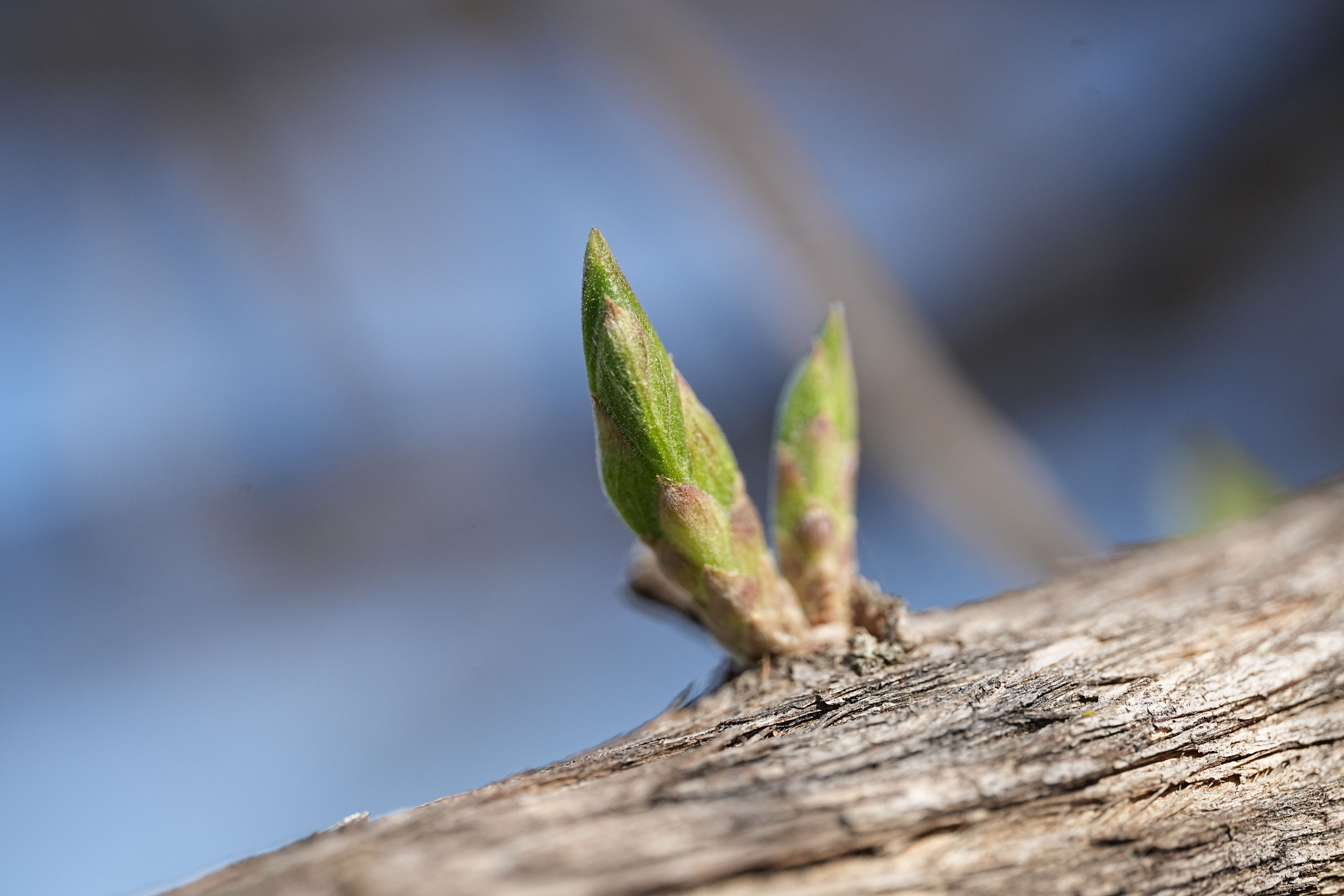
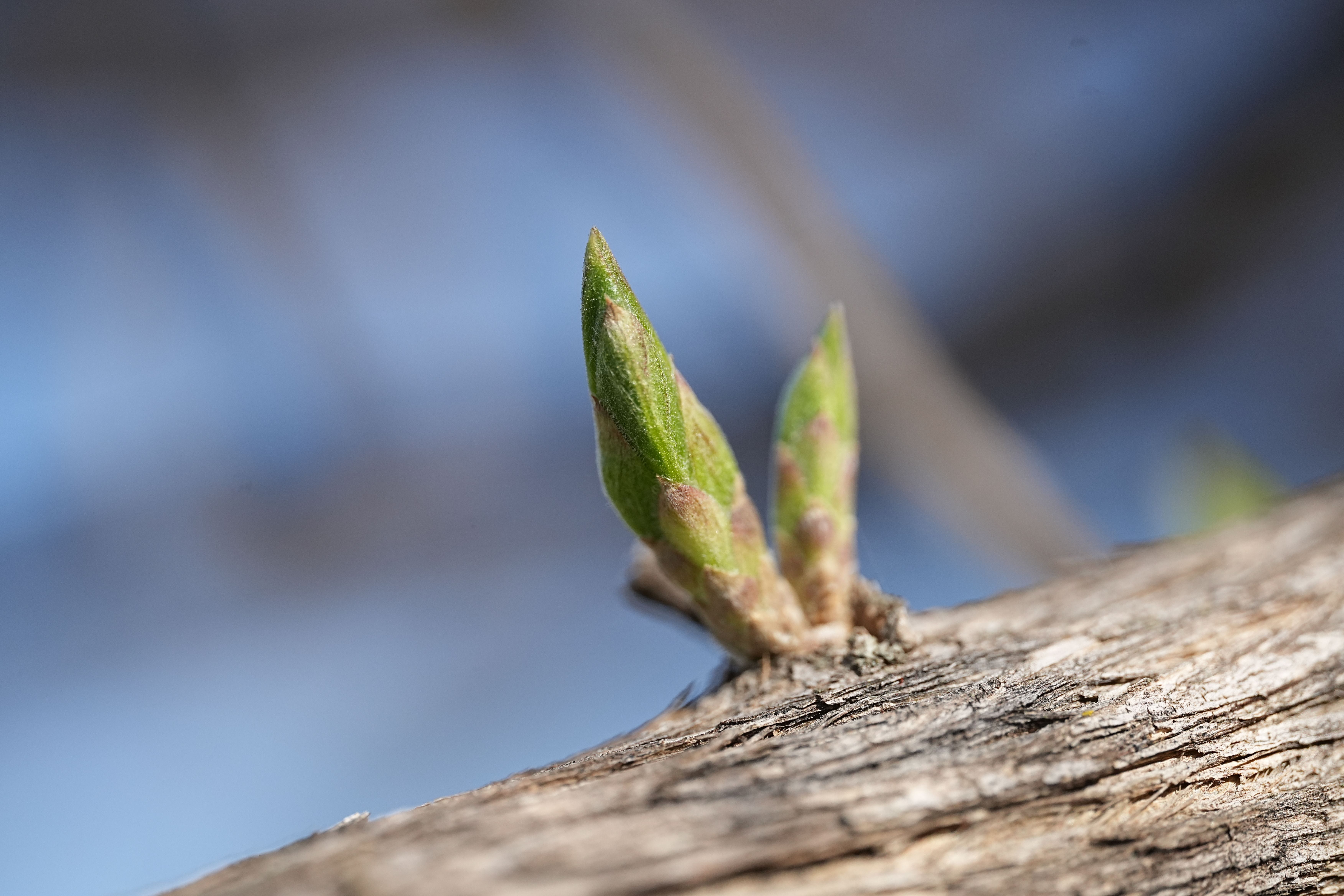
He saw the same broken tree, but now touched by a warm breeze and a gentle rain. The gnarled trunk cracked open. From the cracks, new growth pushed upward into a flowering canopy. Greenery pressed through the surrounding rocks.
That image didn’t come from an external technique or idea. It arose from a level of his being that knew something his conscious mind couldn’t manufacture: that something new and alive could emerge from the wound itself.
What Changed For Michael and Why
Over time, Michael began to reflect on what the illness had cracked open in him.
He saw how much of his professional drive had been organized around proving himself to others. And that has started in high school! He felt the weight of years spent building his business while slowly becoming a stranger to his wife and children. He let himself feel that, and to be touched by the longing underneath it.
He shared some of that vulnerability with his wife. They cried together. They held each other in the pain each had been quietly carrying and hiding from one another. From that, something real and tender began to grow between them.
He began to ask a different question: not “what do I need to accomplish or prove, but what do I actually want to give?”
This is what soul-level work makes possible. We touch on many of the well-known aspects of appreciative inquiry, somatic tracking, nervous system regulation.
But the context is different.
Working with the Neshama is more like gardening: clearing the weeds and old growth, planting something intentional, and trusting that life wants to grow. It is sweet work. Because it is rooted in a place of love, and moves with the current of who a person actually is, rather than against it.
When Michael found that deeper coherence, his system began reorganizing around a more expansive identity. The one that had never been sick. An identity of love, connectedness, and generosity.
The brokenness and challenges of life don’t disappear. But you develop a larger resourceful space in which to hold them. So you can navigate and work with the challenges. That encompassing wholeness is available to all of us, even in the most difficult parts of our experience.
What’s Next
Perhaps you recognize yourself in parts of Michael’s story. Maybe you’ve done the right things medically and therapeutically and still find yourself stranded or lost.
It’s not a personal failing. It is a structural gap in how care is organized, and in our cultural biases.
Closing that gap means working with the whole integrated system. Addressing the biology, attending to structural and functional repair, and making room for the dimension we can’t yet measure. That is the inner work of meaning, identity, and reconnection to what is still fully alive in you, regardless of how broken you might feel.
That is the work of the Tikkun Path program. It’s intensive 1:1 training for successful people whose lives have been derailed by health crisis. You can read more about it in this publication. This is a good place to learn more.
If that speaks to you, I invite you to arrange a free conversation to see whether we’re a right fit.
And please share this article or comment if it was meaningful to you.
Thank you.
Andrew David Shiller
You know I had "My Stroke of Good Fortune." I'll allude to it this week.